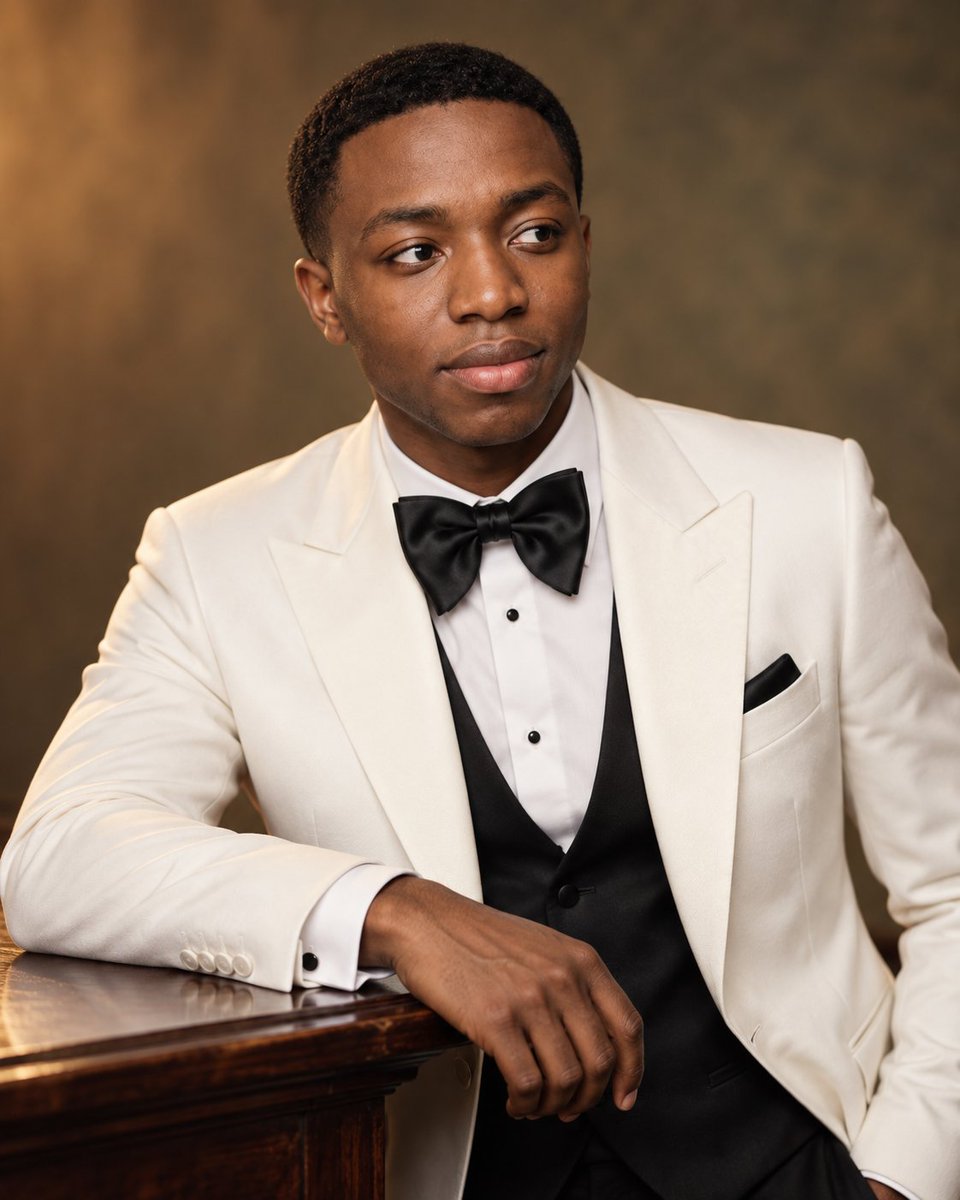
Formal Tuxedo Studio Portrait
Aufrufe1,605
Likes37
Kommentare12
Shares17
Lesezeichen17
Zitate1
Use the subject photo as a facial identity reference

Create an ultra-realistic professional studio portrait of a stylish adult man dressed in an elegant formal outfit, using the reference image for the pose, composition, lighting, wardrobe styling, and overall photographic mood.

Frame the subject from approximately the waist/chest upward at a slight three-quarter angle. Position him leaning casually against the edge of a polished dark wooden table or counter, with one forearm resting naturally on the surface while the other arm remains relaxed beside his body.

Give him a neat low-cut natural haircut with a clean hairline, subtle temple fade, and well-groomed edges. Keep his face clean-shaven with realistic skin texture.

Dress him in a crisp white tailored tuxedo jacket over a clean white formal shirt, paired with a large classic black satin bow tie and subtle black waistcoat detailing beneath the jacket. Keep the tailoring sophisticated, modern, and perfectly fitted.

Give him a warm, confident smile while looking slightly sideways rather than directly into the camera, creating a natural candid expression.

Use a softly blurred warm brown and muted olive studio background with smooth tonal gradients and shallow depth of field. Apply soft professional portrait lighting with warm highlights across the forehead, cheeks, and face, balanced by gentle natural shadows.

Capture realistic skin pores, detailed hair texture, accurate fabric folds, subtle satin reflections on the bow tie, natural hand anatomy, and realistic wooden textures. Premium editorial photography, elegant formal portrait, cinematic bokeh, 85mm portrait-lens aesthetic, wide aperture, high dynamic range, sharp facial focus, photorealistic, ultra-detailed, high-end studio quality.


