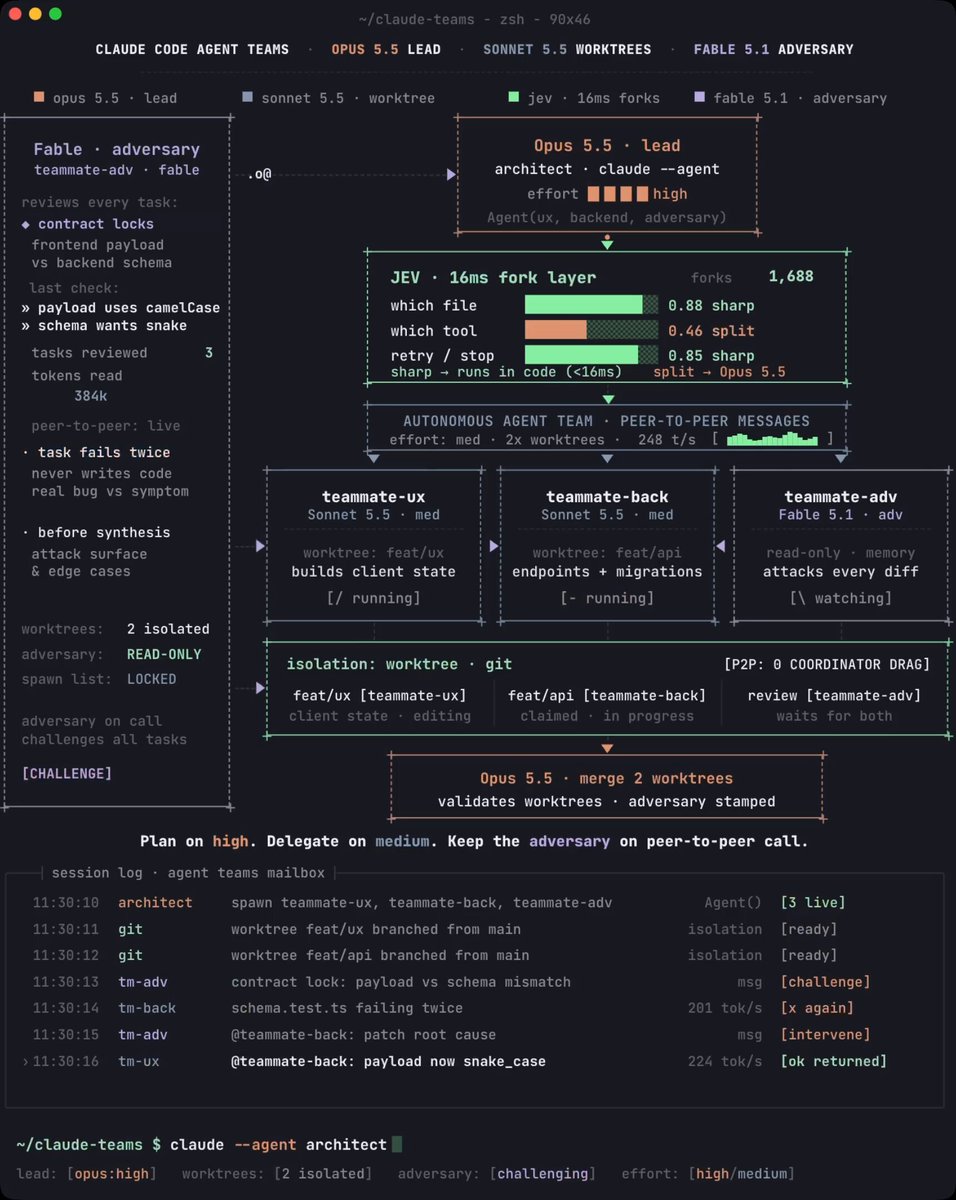
Opus Commands Twelve Agents
觀看34,612
按讚244
留言22
分享19
書籤289
引用2
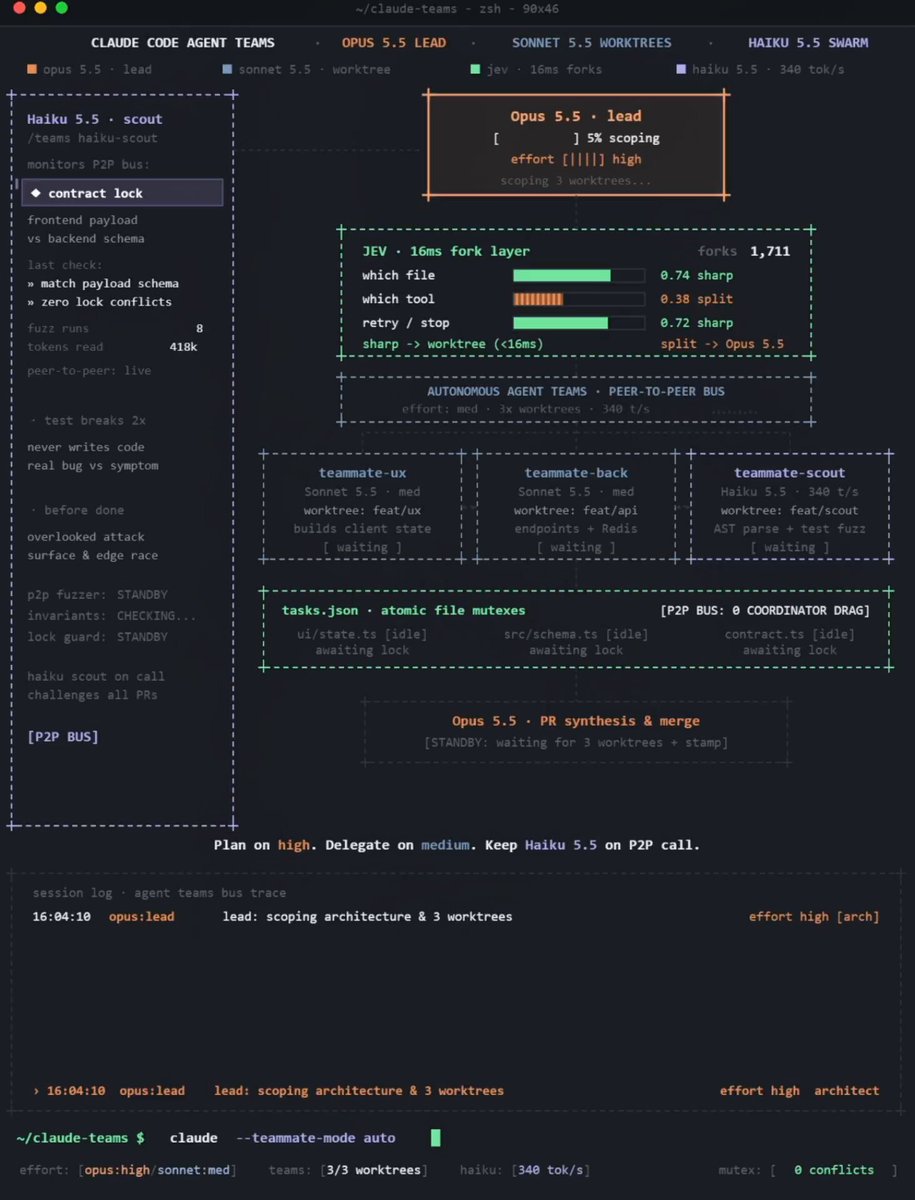
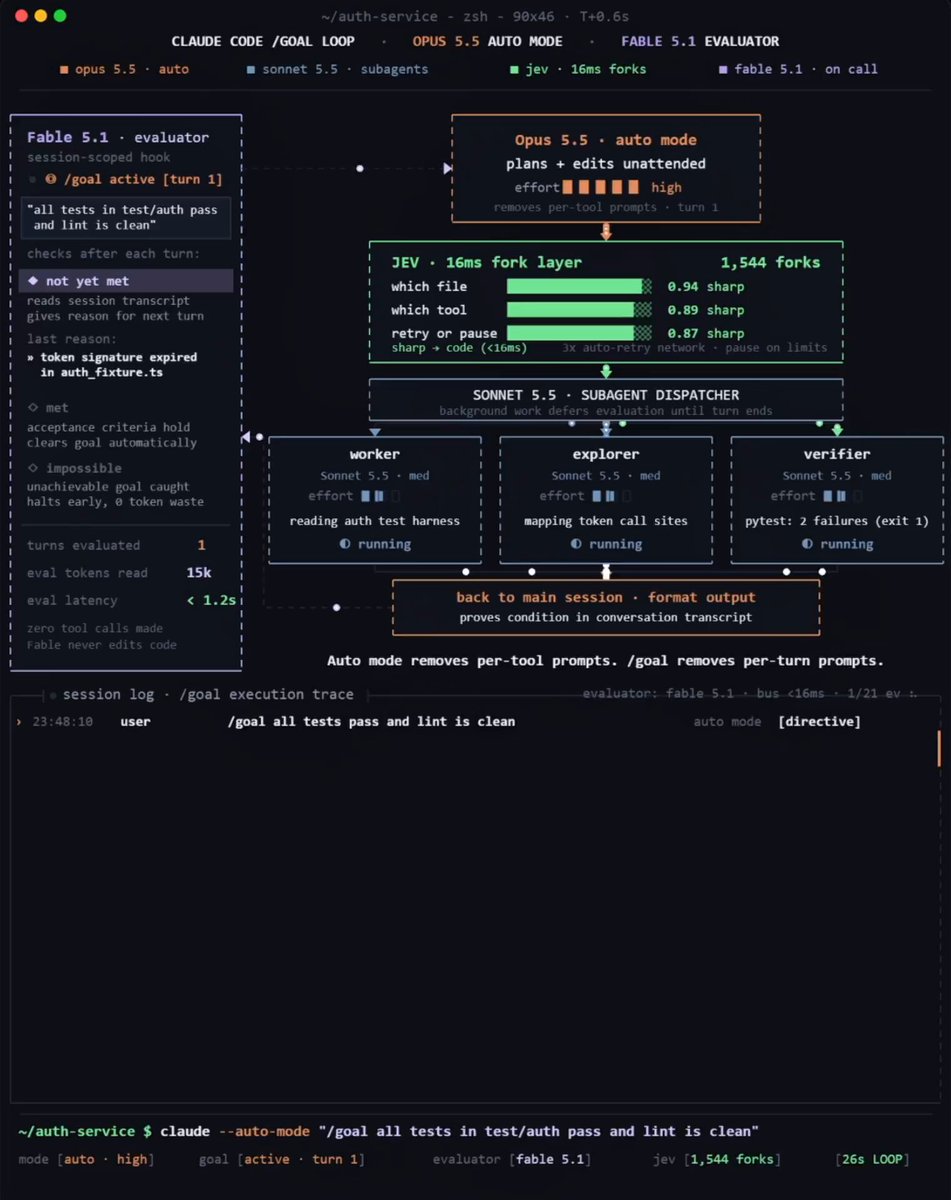
Opus 5.5 runs as commander, splits the mission into tasks and squads
CODE squad on Sonnet 5.5 writes endpoints, refactors auth, migrates the db
TEST squad on Haiku 5.5 runs unit, e2e and load tests
DOCS squad on Haiku 5.5 writes changelog, api docs and release notes
OPS squad on Sonnet 5.5 handles staging, health checks and canary rollout
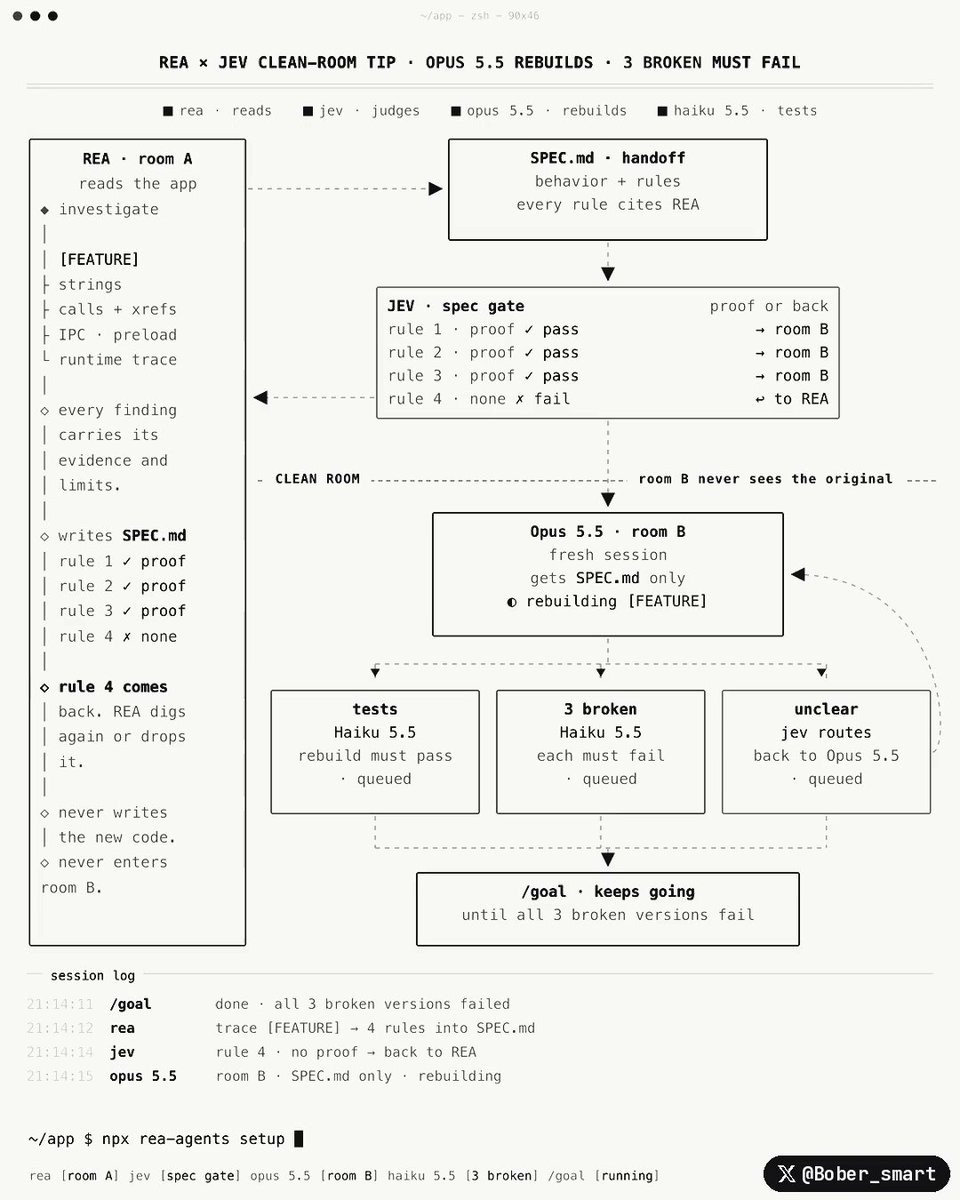
REA reverse-engineers any legacy module into a spec before a squad touches it
every agent reports one line, the commander never reads raw output
Opus 5.5 holds the release gate and waits for all 12 reports
JEV routes micro-forks in milliseconds

Rebuild my Claude Code setup around this tree:

1. Run the main session on Opus 5.5 as a commander: it plans, assigns and approves, it never writes code.
2. Split work into 4 squads: CODE and OPS on Sonnet 5.5, TEST and DOCS on Haiku 5.5, 12 agents total.
3. Every agent reports a one-line structured result. Raw logs never enter the main session.
4. Before any squad touches legacy code, run REA on it first and have the squad build from the spec, not the old files.
5. Add one rule to CLAUDE.md: nothing ships until every squad has reported and the commander opens the release gate.
6. Route deterministic forks (squad choice, model choice, retries) through JEV.

Show me every change as a diff first. No edits until I say go.