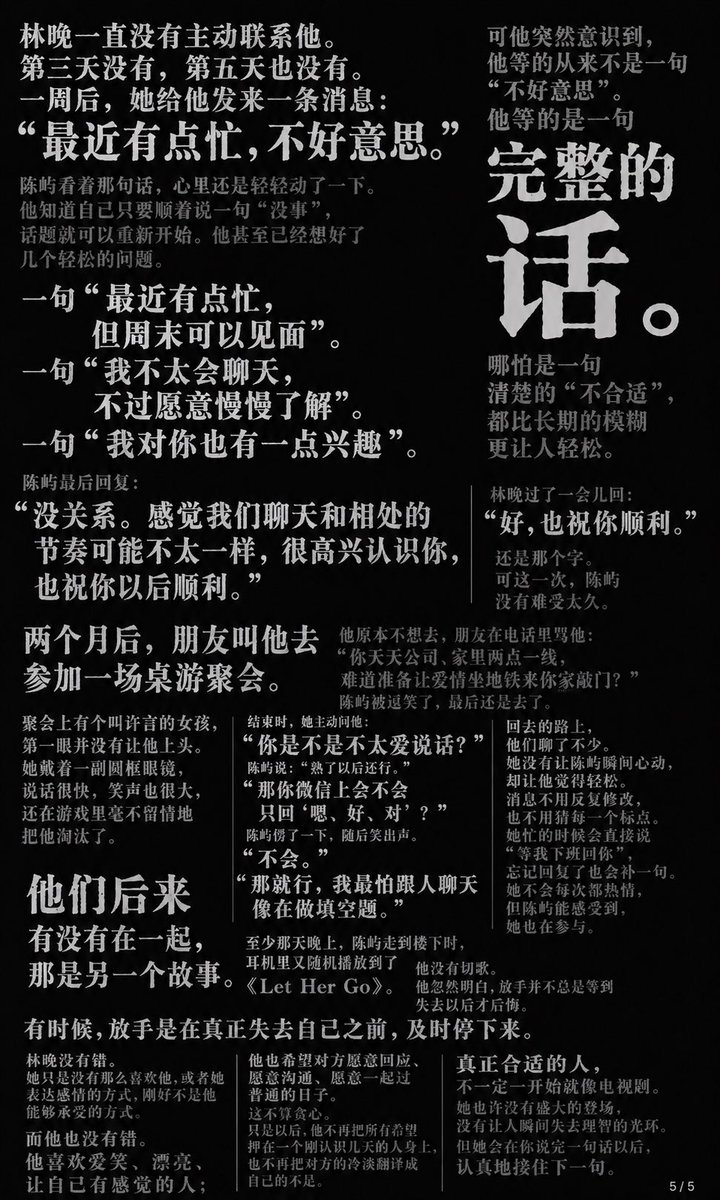
Chinese Novel Quote Typography Poster
views4,200
likes51
comments9
shares3
bookmarks34
quotes0
Goal: Create a vertical Chinese literary typography poster from a novel excerpt, designed like a dramatic black-and-white book quote spread. Use the provided text as the main content: {argument name="novel excerpt" default="林晚一直没有主动联系他。第三天没有,第五天也没有。一周后,她给他发来一条消息:“最近有点忙,不好意思。” 陈峙看着那句话,心里还是轻轻动了一下。他知道自己只要顺着说一句“没事”,话题就可以重新开始。他甚至已经想好了几个轻松的问题。一句“最近有点忙,但周末可以见面”。一句“我不太会聊天,不过愿意慢慢了解”。一句“我对你也有一点兴趣”。陈峙最后回复:“没关系。感觉我们聊天和相处的节奏可能不太一样,很高兴认识你,也祝你以后顺利。” 两个月后,朋友叫他去参加一场桌游聚会。聚会上有个叫许言的女孩,第一眼并没有让他上头。她戴着一副圆框眼镜,说话很快,笑声也很大,还在游戏里毫不留情地把他淘汰了。结束时,她主动问他:“你是不是不太爱说话?” 陈峙说:“熟了以后还行。” “那你微信上会不会只回‘嗯、好、对’?” 陈峙愣了一下,随后笑出声。“不会。” “那就行,我最怕跟人聊天像在做填空题。” 至少那天晚上,陈峙走到楼下时,耳机里又随机播放到了《Let Her Go》。可他突然意识到,他等的从来不是一句“不好意思”。他等的是一句完整的话。哪怕是一句清楚的“不合适”都比长期的模糊更让人轻松。林晚过了一会儿回:“好,也祝你顺利。” 还是那个字。可这一次,陈峙没有难受太久。他原本不想去。朋友在电话里骂他:“你天天公司、家里两点一线,难道准备让爱情坐地铁来你家敲门?” 陈峙被逗笑了,最后还是去了。回去的路上,他们聊了不少。她没有让陈峙瞬间心动,却让他觉得轻松。消息不用反复修改,也不用猜每一个标点。她忙的时候会直接说“等我下班回你”,忘记回复了也会补一句。她不会每次都热情,但陈峙能感觉到,她也在参与。他们后来有没有在一起,那是另一个故事。有时候,放手是在真正失去自己之前,及时停下来。林晚没有错。她只是没有那么喜欢他,或者她表达感情的方式,刚好不是他能够承受的方式。而他也没有错。他喜欢爱笑、漂亮、让自己有感觉的人;他也希望对方愿意回应,愿意沟通,愿意一起过普通的日子。这不矛盾。只是以后,他不再把所有希望押在一个刚认识几天的人身上,也不再把对方的冷淡翻译成自己的不足。真正合适的人,不一定一开始就像电视剧。她也许没有盛大的登场,没有让人瞬间失去理智的光环。但她会在你说完一句话以后,认真地接住下一句。"}
Canvas: Tall mobile poster, 9:16 aspect ratio, black background with subtle paper grain, slightly worn edges, high contrast white and gray Chinese text. Add a tiny page marker “5/5” in the bottom-right corner.
Layout: Use exactly 3 vertical columns separated by 2 thin pale-gray vertical divider lines. The left column is widest and contains the opening, central conversation, and final reflection. The right column begins near the top with a compact paragraph and an oversized emphasis phrase. The middle/lower area contains smaller narrative paragraphs and dialogue. Keep generous margins and an editorial magazine feel, not a clean infographic.
Typography: Use bold Chinese serif/Songti-style type for major emphasis, with rough ink texture and slight irregular edges. Use smaller gray-white serif body text for narration. Make the main quote near the upper left large and bold: {argument name="main quote" default="“最近有点忙,不好意思。”"}. Make the largest vertical visual anchor on the upper right read: {argument name="largest emphasized phrase" default="完整的话。"}. Make a second major bold headline in the lower left read: {argument name="secondary headline" default="他们后来有没有在一起,那是另一个故事。"}. Include scattered medium-bold dialogue lines, all in Chinese punctuation.
Text hierarchy: Count and include exactly 5 prominent text elements: 1) upper-left opening paragraph, 2) huge upper-left quoted sentence, 3) upper-right oversized phrase, 4) lower-left bold headline, 5) bottom reflection sentence. Surround them with many smaller supporting paragraphs from the excerpt, arranged like dense literary poster typography.
Visual style: monochrome, cinematic, melancholic, literary, emotional, minimal decoration, no illustrations, no photos, no icons. Use only typography, dividers, spacing, scale contrast, and texture to create the composition.
Constraints: Preserve the Chinese text exactly as supplied where readable. Do not add decorative imagery, borders, logos, or extra colors. Keep the poster legible but intentionally dense, like a designed novel excerpt page.


